Anyone opening a Chinese smartphone for the first time meets a familiar feeling in unfamiliar packaging. The icons are different, the names do not ring a bell, yet the jobs they do are instantly recognizable: chat with friends, watch short clips, order lunch, pay the bill. China built a parallel consumer internet that mirrors the Western one function by function while diverging sharply in structure, and learning the mapping is the fastest way to understand it.
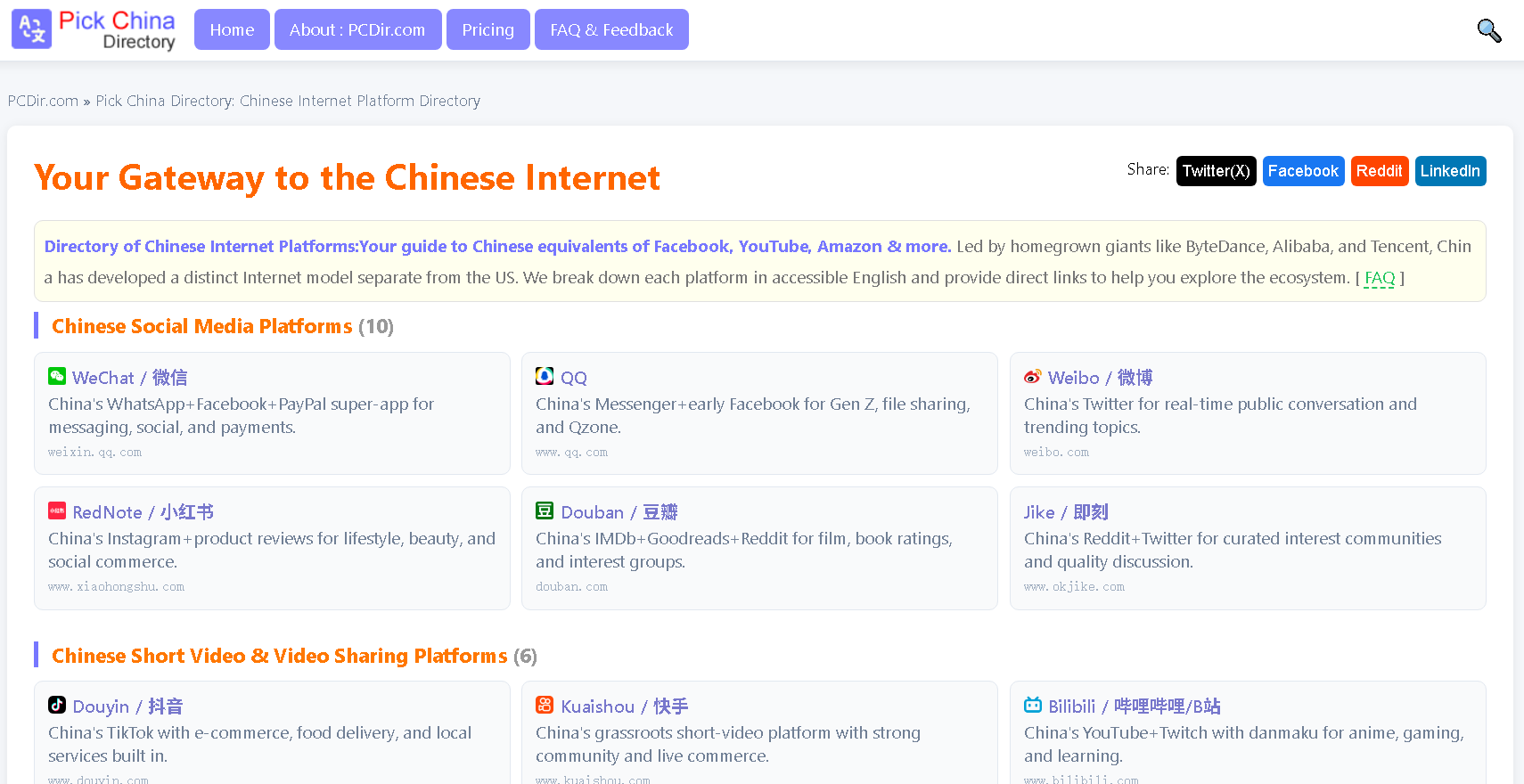
The split was not part of some grand design. The largest American social and search platforms never established a lasting presence on the mainland, and domestic companies filled each vacancy under a distinct set of regulations. A practical guide to the Chinese internet therefore works like a translation table, pairing each local service with the Western product it most resembles so a newcomer can orient within seconds.
Why one-to-one comparisons always break down
Early Chinese startups borrowed heavily from Silicon Valley layouts, but the resemblance faded as mobile took over. With cheap smartphones everywhere, firms designed for the handset first and treated the desktop site as an afterthought. Tencent turned its chat tool into an operating layer: mini-programs and Official Accounts let restaurants, airlines, and city services run their entire business inside the conversation window instead of maintaining a standalone website. Some merchants have abandoned the open web altogether, which is why their desktop pages can look neglected next to a polished app.
The honest answer to what serves as the local YouTube or the local Amazon is therefore rarely a single name. Short video belongs to one pair of rivals, long-form streaming to another, and live commerce blends entertainment with checkout in a format Western retail only experiments with. E-commerce itself fragments by use case: one giant dominates everyday parcels, another wins on group discounts and farm-direct groceries, and a third owns fashion discovery through livestream hosts. Each pairing is a recognition aid rather than a claim of equivalence, and several Chinese products have no close Western counterpart at all.
Two cases that show how far the paths diverged
Consider payments. In the West, cards and wallets from banks and card networks still anchor checkout. In China, two chat-born wallets leapfrogged cards entirely: street vendors print a QR code, customers scan it, and settlement completes inside the same app that carries their messages. A second case is local services. Super-apps bundle transit codes, doctor appointments, utility bills, and food delivery behind one login, while Western users still juggle a folder of single-purpose tools. Both examples share a pattern: density of functions inside a few gatekeeper apps, not breadth of independent websites.
A practical way to explore without drowning
Faced with more than twenty crowded categories, from short drama and web novels to AI assistants and fintech, the sensible approach is to start from needs rather than names. Pick one daily habit such as messaging, video, shopping, or search, learn the two or three leaders in that lane, and note who operates each one plus whether it loads from abroad. Category-by-category notes that record the operator and cross-border reach beat raw user counts, which shift too fast to trust. Dated facts and links to each platform’s official page let readers verify claims directly instead of relying on stale league tables.
Corrections from readers keep such a reference honest, since ownership deals and app-store availability change quarter to quarter. Send a broken link or an outdated pairing through the feedback channel and the entry improves for the next visitor. That loop matters more than any single snapshot: the directory succeeds when a first-time visitor can place every unfamiliar icon within a minute and know exactly where to check next.